
Forecast vs Pipeline: What’s the Difference and How to Use Both
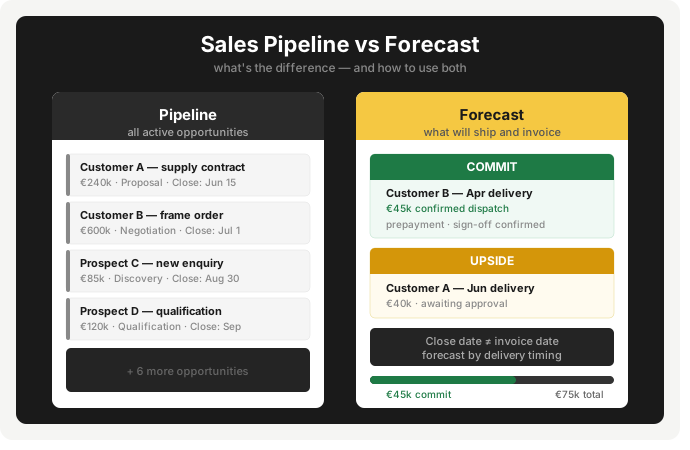
A sales pipeline is every active opportunity you are working on. A sales forecast is what you are willing to commit to shipping and invoicing in a specific period. They are not the same thing. Confusing them leads to bad internal planning, missed delivery dates, and a forecast nobody believes.
Supply chain had the timetable. They were ready to source.
I had to stop them.
We had just signed a multi-year supply contract in the Gulf. Precise delivery schedule, clear volumes, everything documented. My colleagues in supply chain did what any reasonable team would do — they took the plan at face value and started preparing capacity.
The problem was that I knew the region. In the Gulf, a signed timetable is a starting point, not a production schedule. Some sections would be expedited. Others would be pushed. Prepayment hadn’t landed. Technical parameters still needed final customer sign-off before we could trigger production.
The pipeline looked clean. Dates were realistic. Probabilities were honest. But the forecast — what would actually ship and invoice by period — was a different number entirely.
That gap between pipeline and forecast almost sent supply chain in the wrong direction. This post explains the difference, why it matters, and how to use both correctly.
At a Glance
- Pipeline = every active opportunity you are working on, mixed certainty
- Forecast = what will realistically ship and invoice in a defined period
- Close date is not the same as invoice date
- Use Commit vs Upside to forecast without sandbagging
- A reliable forecast protects ops, finance, and your credibility
Pipeline vs Forecast: What Each One Actually Means
The confusion usually starts because both words live in the same conversations, the same CRM, and the same weekly meetings. But they do different jobs.
Three terms worth separating cleanly:
Sales funnel — A high-level view of volume moving through stages — leads, opportunities, wins. Useful for conversion analysis. Not an operational tool.
Sales Pipeline
Every active opportunity you are working on that has a real next step — stage, value, expected close date, next action.
- Includes early-stage deals and maybes
- Timing anchor: expected close date
- Mixed confidence — work in progress
- Used by: sales reps and managers
- Common mistake: treating it as the forecast
Sales Forecast
What you are willing to stand behind for a specific period — what will realistically be shipped and invoiced, and roughly when.
- Evidence-based deals only — no maybes
- Timing anchor: dispatch and invoice date
- Commit or Upside buckets only
- Used by: ops, finance, leadership
- Common mistake: forecasting from close dates only
Simple mental model: pipeline shows possibilities, forecast shows what the business can plan around.
If your pipeline is full of stale deals and fake close dates, clean it first with the pipeline hygiene checklist before you touch the forecast.
Why the Two Get Confused — and Who Pays for It
The words sound similar. They live in the same CRM. They come up in the same meetings. And in most companies nobody ever explicitly explains the difference — so reps learn by guessing.
The result is the same pattern everywhere: the manager asks for a forecast, gets the full pipeline export, and makes decisions based on numbers that include early-stage deals, maybes, and opportunities that haven’t had a real conversation in weeks.
That is not a forecasting problem. That is a definition problem.
And it is not just an internal reporting issue. Here is who pays for it:
- Management — budgets, hiring, and investments planned around revenue that never arrives
- Ops and supply chain — wrong materials sourced, wrong capacity reserved, rush orders later
- Finance — Closed Won does not equal invoiced revenue; cash planning becomes guesswork
- Customers — overpromised delivery dates, delays, trust loss
- You — your forecast becomes the number nobody believes
The fix is not a better CRM or a longer meeting. It is a clean definition of what belongs in each bucket — and the discipline to keep them separate.
If you sell in emerging markets, that discipline matters even more — currency moves, sovereign payment restrictions and deals that look confirmed but are not all make the pipeline-to-forecast gap wider and more dangerous. Here is why sales forecasting in emerging markets is a different challenge entirely. For why qualification fails before a deal even reaches your pipeline, see 10 reasons your B2B qualification process fails in emerging markets.
Delivery-Based Forecasting: The One Shift That Changes Everything
Most reps forecast from close dates. That is the first mistake.
Close date is when you expect a decision. Forecast month is when you expect to ship, deliver, and invoice. In a short transactional sale those two dates might be close enough that the difference doesn’t matter. In B2B manufacturing, distribution, or any business with lead times, production cycles, or staged deliveries — the gap between them can be months.
Here is a simple example. You win a €600k annual supply agreement in March. Closed Won. Pipeline cleared. Everyone is happy.
But the revenue doesn’t land in March. Deliveries happen through call-offs:
- April: €40k shipped and invoiced
- May: €50k
- June: €45k
- And so on through the year
Pipeline view: the deal is done in March. Forecast view: the revenue is spread across twelve months based on dispatch and invoicing. If you forecast from the close date, you are lying to yourself — and to every department planning around your numbers.
This is exactly what happened with the Gulf supply contract. The timetable looked precise on paper. But in that region a signed schedule is a starting point, not a German production plan. Some sections would be expedited, others pushed. And before any production could start, two things had to happen first: prepayment received and all technical parameters confirmed by the customer. Neither had landed yet.
Supply chain was ready to source based on the close date. I had to explain that the forecast — what would actually ship by period — was a different number entirely. That conversation was uncomfortable. It should not have been necessary.
The rule is simple: forecast by delivery and invoice timing, not by close date. If you are working in a business where Incoterms affect when revenue is recognised, that timing question matters even more.
Commit vs Upside: How to Build a Forecast You Can Defend
Once you separate pipeline from forecast, the next problem is honesty. Most reps either sandbag — keeping numbers low to guarantee they hit — or inflate, showing optimism to avoid difficult conversations with management. Neither works. Both destroy credibility over time.
The fix is two buckets: Commit and Upside.
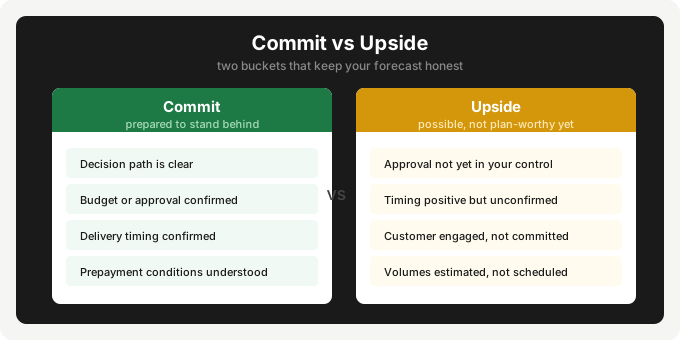
Commit — what you are prepared to stand behind
A deal belongs in Commit only when all of the following are true:
- The decision path is clear — you know who approves and when
- Budget or commercial approval is real, not assumed
- Delivery timing is confirmed — not just the close date
- Volumes are based on evidence: history, confirmed schedules, or signed ramp-up plan
- Prepayment or order confirmation conditions are understood
If any of those are missing, the deal is not Commit. It stays Upside until the missing piece lands.
Upside — possible, not plan-worthy yet
Upside deals have a real path but too much uncertainty to plan operations around:
- Approval depends on a decision you do not control
- Timing is positive but not confirmed
- Customer is engaged but not committed
- Volumes are estimates, not schedules
Upside is not a dumping ground for weak deals. If a deal has no realistic path to closing in the period, it does not belong in Upside either — it belongs in the pipeline, not the forecast.
How to handle manager pressure
When a manager pushes for bigger numbers, do not move deals from Upside to Commit to satisfy the request. That is how forecasts stop being trusted.
Say it simply: “This is what I have confirmed based on delivery plans and approvals. This is upside if the remaining conditions land. I am not going to commit to numbers I cannot defend.”
That is not weakness. That is the only way your forecast ever becomes a number operations and finance can actually use.
Once you have your Commit and Upside sorted, the next step is running the formal review. Here is how to run a forecast review meeting where those categories get properly challenged.
Want to calculate the gap between your forecast and target?
Once your Commit and Upside are clean, use the gap-to-budget analysis to calculate the shortfall and turn it into a concrete action plan.
The Most Common Mistakes — and the Fix for Each
Most forecast problems come back to the same four mistakes.
Mistake 1: Treating the whole pipeline as the forecast
Fix: only deals with confirmed delivery timing and real evidence belong in the forecast. Everything else stays pipeline.
Mistake 2: Forecasting from close dates only
Fix: close date is decision timing. Forecast month is dispatch, delivery, and invoice timing. They are rarely the same date.
Mistake 3: Assuming Closed Won equals invoiced revenue
Fix: a win is a milestone, not revenue. Split expected deliveries across periods based on call-offs, ramp-up schedules, and confirmed dispatch dates.
Mistake 4: Copying the customer forecast directly into your forecast
Fix: customer forecasts are valuable input, not ground truth. Validate the assumptions, check historical reliability, then adjust before it goes into your numbers.
Pipeline Forecasting: What It Is and How to Use It
Pipeline forecasting is the practice of using your current pipeline data to build a rolling revenue estimate. Instead of guessing from historical averages alone, you look at what is actually in the pipeline right now — stage, value, probability, and delivery timing — and use that to project what will land in the coming periods.
It is more responsive than pure historical forecasting because it reflects what is happening in your pipeline today, not what happened six months ago.
The basic logic works in four steps:
- Clean the pipeline first — stale deals and fake close dates corrupt everything downstream. No clean pipeline, no reliable forecast.
- Assign stage probabilities based on evidence — not gut feel. If deals at proposal stage close 30% of the time historically, use 30%, not the rep’s optimism.
- Adjust for delivery timing — a deal closing in week one of the month forecasts differently than one closing in week four. Factor in lead times and dispatch reality.
- Separate Commit from Upside — pipeline forecasting works best when the Commit layer is already clean. Upside adds a probability-weighted buffer on top.
Pipeline forecasting is not a one-time exercise. It works as a rolling discipline — updated weekly as deals move, slip, or drop out. The output is a forecast the business can actually plan around, not a number that changes every time someone asks a question.
If your pipeline is too dirty to forecast from reliably, start with the pipeline hygiene checklist before you build the forecast.
Conclusion
Pipeline and forecast are not interchangeable. Pipeline is what you are working on. Forecast is what will realistically ship and invoice in a defined period.
Keep them separate and three things happen: operations plans better, customers get realistic delivery promises, and your numbers become the ones the business trusts.
The next step is putting the forecast into practice. Here is how to run a forecast review meeting that turns your Commit and Upside into decisions the whole team can act on.
FAQ: Forecast vs Pipeline
A sales pipeline is every active opportunity you are working on — all stages, mixed certainty, work in progress. A sales forecast is what you are willing to commit to shipping and invoicing in a specific period. Pipeline shows possibilities. Forecast shows what the business can plan around.
Pipeline forecasting uses your current pipeline data — stage, value, probability, and delivery timing — to build a rolling revenue estimate. It reflects what is actually in your pipeline today rather than relying on historical averages alone. It works best when the pipeline is clean and Commit is already separated from Upside.
Commit is what you are prepared to stand behind — confirmed delivery timing, clear decision path, real budget approval. Upside is possible but not reliable enough to plan operations around. The two buckets prevent inflated forecasts without killing ambition.
No. Only evidence-based deals with confirmed delivery timing belong in the forecast. Early-stage deals and maybes stay in the pipeline. Putting everything in the forecast is the fastest way to lose credibility with your manager and operations team.


